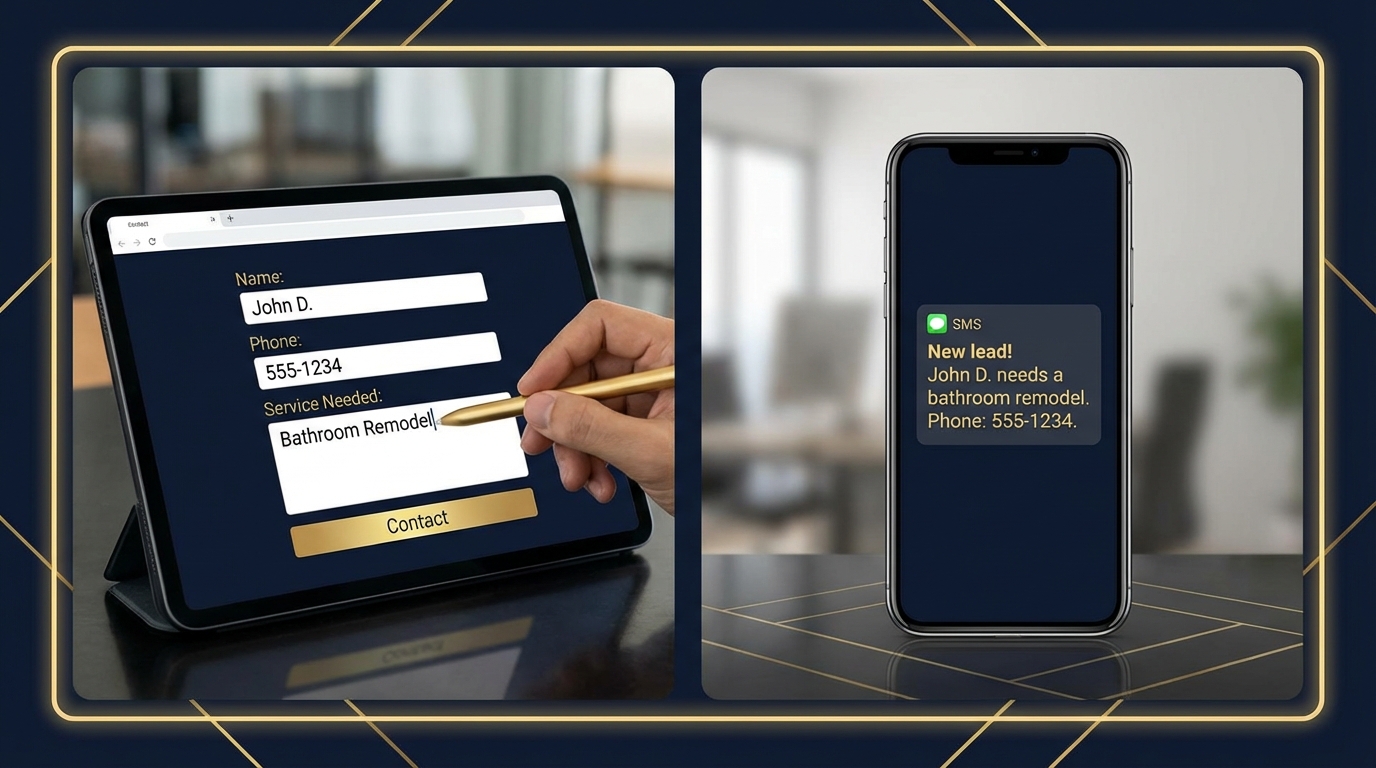
A solid marketing system starts with a clear strategy, not more tactics.
If you're a contractor in 2026 and you're still relying on word-of-mouth and a Facebook page to fill your pipeline, you're leaving six figures on the table. That's not an exaggeration. The contractors winning right now aren't necessarily the best at their trade, they're the best at being found, trusted, and easy to hire.
This guide is the real playbook. No fluff, no recycled "post on social media more" advice. We'll walk through the exact marketing system we build for contractors at Double G Consulting, what each piece costs, what it returns, and how to prioritize it if you're just getting started.
What You'll Learn
- Why Contractor Marketing Changed in 2026
- The Foundation: Your Website & Google Presence
- Local SEO and Google Maps Dominance
- Reviews: The New Word-of-Mouth
- Lead Capture and Speed-to-Lead
- Automation & AI: Stop Missing Jobs
- Paid Ads vs. Organic Growth
- What to Budget (By Revenue Stage)
- Common Mistakes That Waste Money
- Putting It All Together
1. Why Contractor Marketing Changed in 2026
The contractor buyer's journey looks nothing like it did even three years ago. Homeowners aren't calling three neighbors for recommendations anymore. They're typing "roofer near me" into Google at 9:47 PM after the storm, scanning reviews for 90 seconds, and texting the first contractor whose site loads fast and whose reviews don't look fake.
That's the entire sales funnel. You have roughly 90 seconds from the moment a homeowner decides they need you to the moment they've chosen who to call. If your online presence doesn't do the selling in that window, you're out.
What's changed most is the role of AI. Google's AI Overviews, ChatGPT, and local AI search are all pulling answers directly from contractor websites, business profiles, and reviews. If your content isn't structured for them, you're invisible. If your reviews are weak, you're skipped entirely.
2. The Foundation: Your Website & Google Presence
Before we talk about lead gen, we have to talk about what happens once a lead finds you. Because no amount of traffic saves a website that doesn't convert.
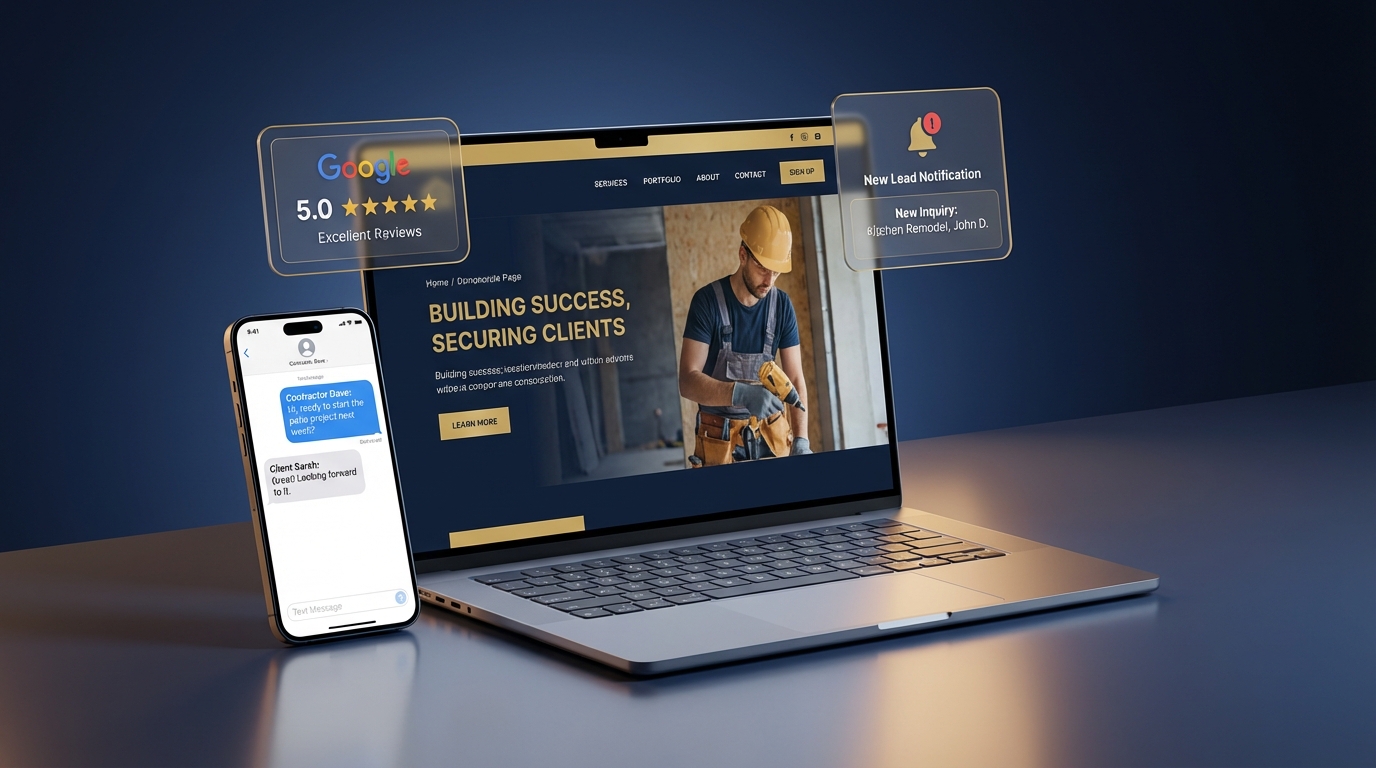
Your website is your 24/7 sales rep. It should load in under 3 seconds and tell visitors exactly what to do next.
A high-performing contractor website in 2026 has five non-negotiables:
- Speed: Under 3 seconds to first paint. Homeowners bounce after that.
- Mobile-first design: 70%+ of your traffic is on a phone.
- One clear call to action above the fold, typically "Get a Free Quote" or a phone number tap-to-call.
- Trust signals: Reviews, license numbers, insurance badges, before/after photos.
- Lead capture on every page: Sticky forms, exit-intent popups, or click-to-text.
If your site is three years old and was built by your cousin, it's costing you jobs. The homeowner doesn't give you the benefit of the doubt, they assume an outdated site means outdated work.
What About Google Business Profile?
Your Google Business Profile (GBP) does more heavy lifting than your website in the early stages. For most local searches, the Google Maps "3-pack" shows before the organic results. If you're not in that 3-pack, most leads never even see you. We wrote an entire Google Business Profile guide for contractors if you want to go deep, but the short version: fill out every field, add weekly photos, respond to every review, and post updates.
3. Local SEO and Google Maps Dominance
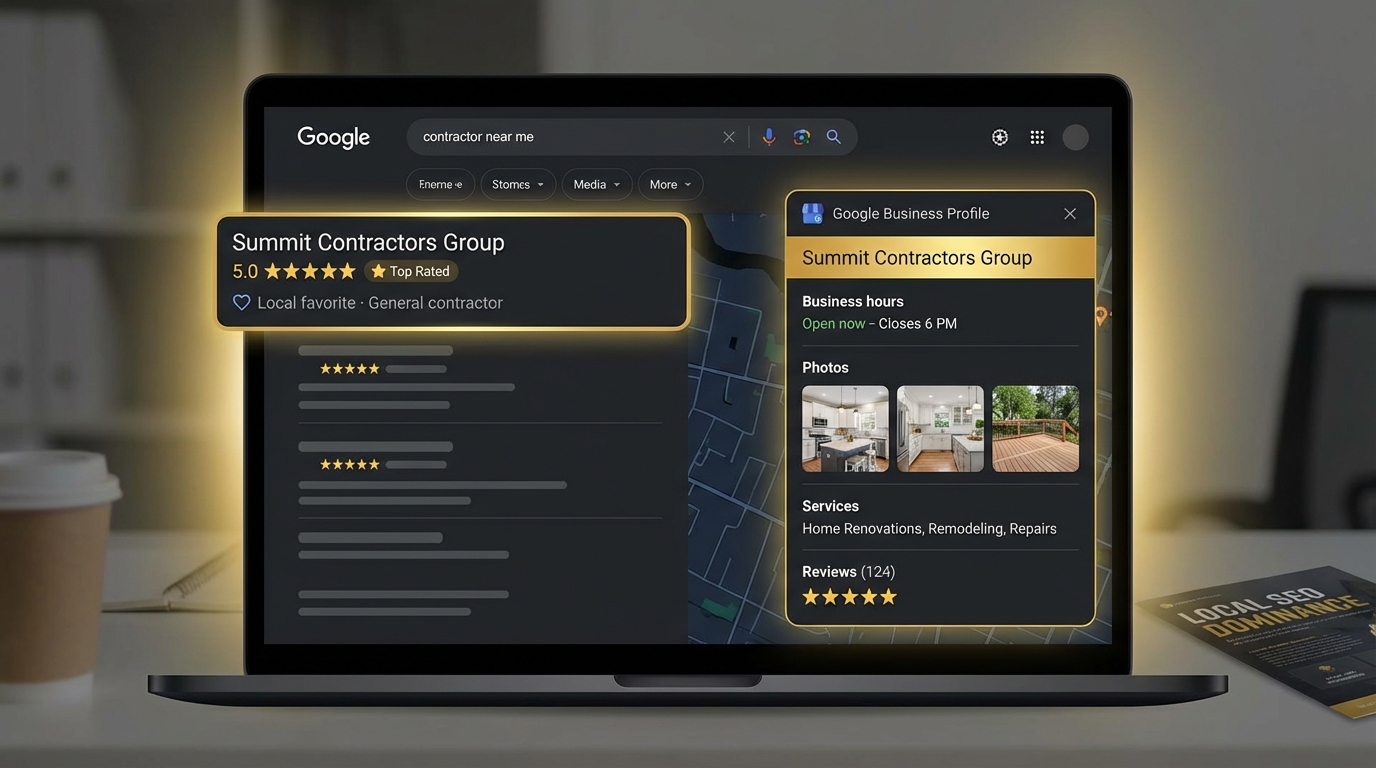
The Maps 3-pack gets roughly 44% of all local search clicks. Ranking here is non-negotiable.
Local SEO is the single highest-ROI marketing channel for contractors. Nothing else comes close. A homeowner searching "bathroom remodel [city]" has intent, has budget, and is ready to buy. Your job is to show up when they search.
The three factors Google weighs heaviest for local ranking:
- Proximity to the searcher (can't control this, but you can expand your service radius with strategic content).
- Relevance signals: categories, services listed, keywords in your profile and reviews.
- Prominence: number and quality of reviews, backlinks, citations, and engagement.
For a full breakdown of tactics that actually move your ranking, read our guide to ranking on Google Maps and our deep dive on contractor local SEO.
Quick Win: Add service-area pages to your website for every city/suburb you serve. Don't duplicate content, write a unique page per city with local landmarks, project photos, and customer names from that area. This alone can double your local traffic within 60 days.
4. Reviews: The New Word-of-Mouth
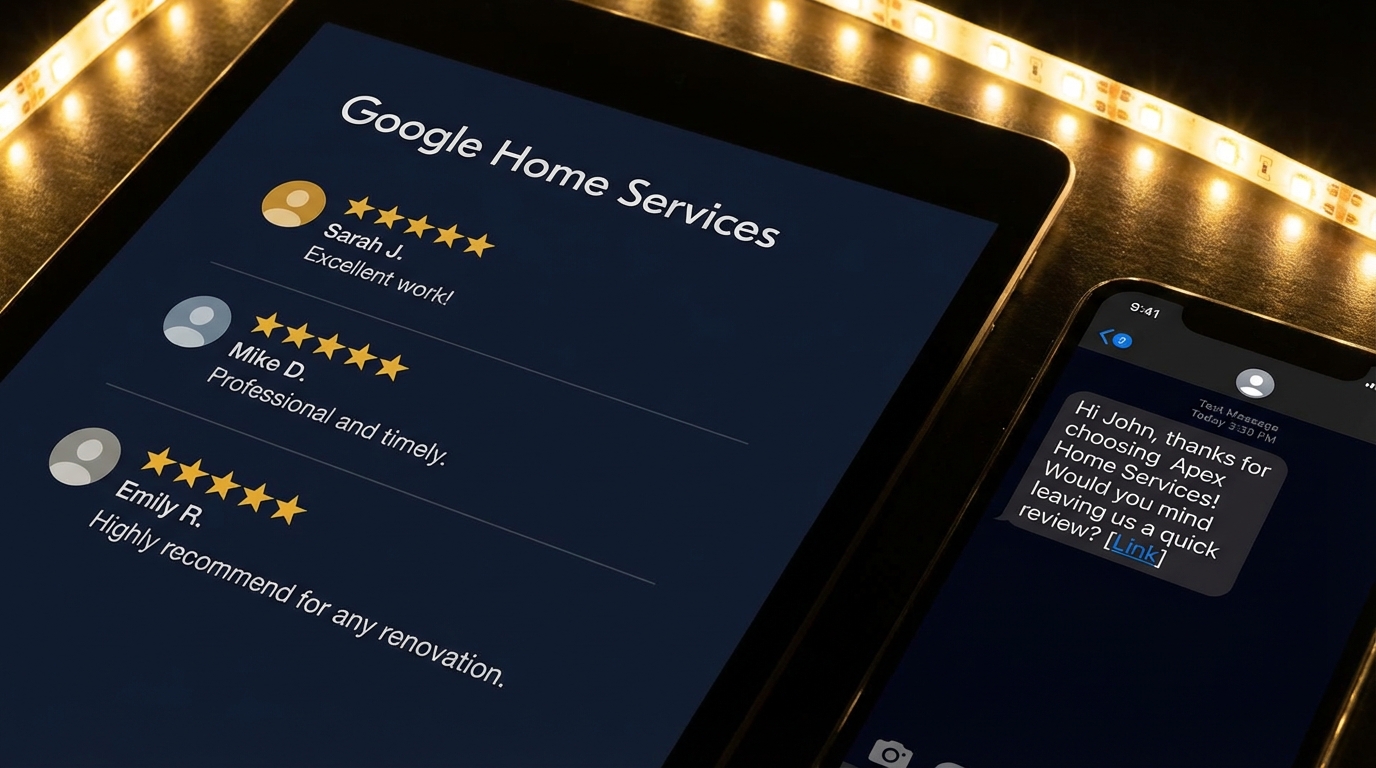
Reviews influence both Google's ranking algorithm and the homeowner's decision. They do double duty.
Homeowners trust online reviews about as much as a personal recommendation now. The average homeowner reads 7-10 reviews before contacting a contractor, and they're looking for three things: volume, recency, and responses.
- Volume: Under 25 reviews and you look new or unproven. 50+ is the new baseline. 200+ is elite.
- Recency: If your last review was 14 months ago, homeowners assume you're either slowing down or out of business.
- Responses: Every single review, positive or negative, needs a thoughtful response from you within 48 hours.
The good news: getting reviews is a systems problem, not a charisma problem. Our automated review request system sends a text to every customer 24 hours after job completion with a one-tap link to Google. Contractors using it go from 1-2 reviews per month to 15-30. Learn how to do it right in our breakdown on getting more Google reviews.
5. Lead Capture and Speed-to-Lead
Here's a stat that keeps contractors up at night once they understand it: the contractor who responds first wins the job 78% of the time, regardless of price. Not the best contractor. The fastest.
And yet, most contractors take 4+ hours to return a call. Some never respond at all. The average is 47 hours. That's not a marketing problem, that's a systems problem, and it has a dollar amount attached.
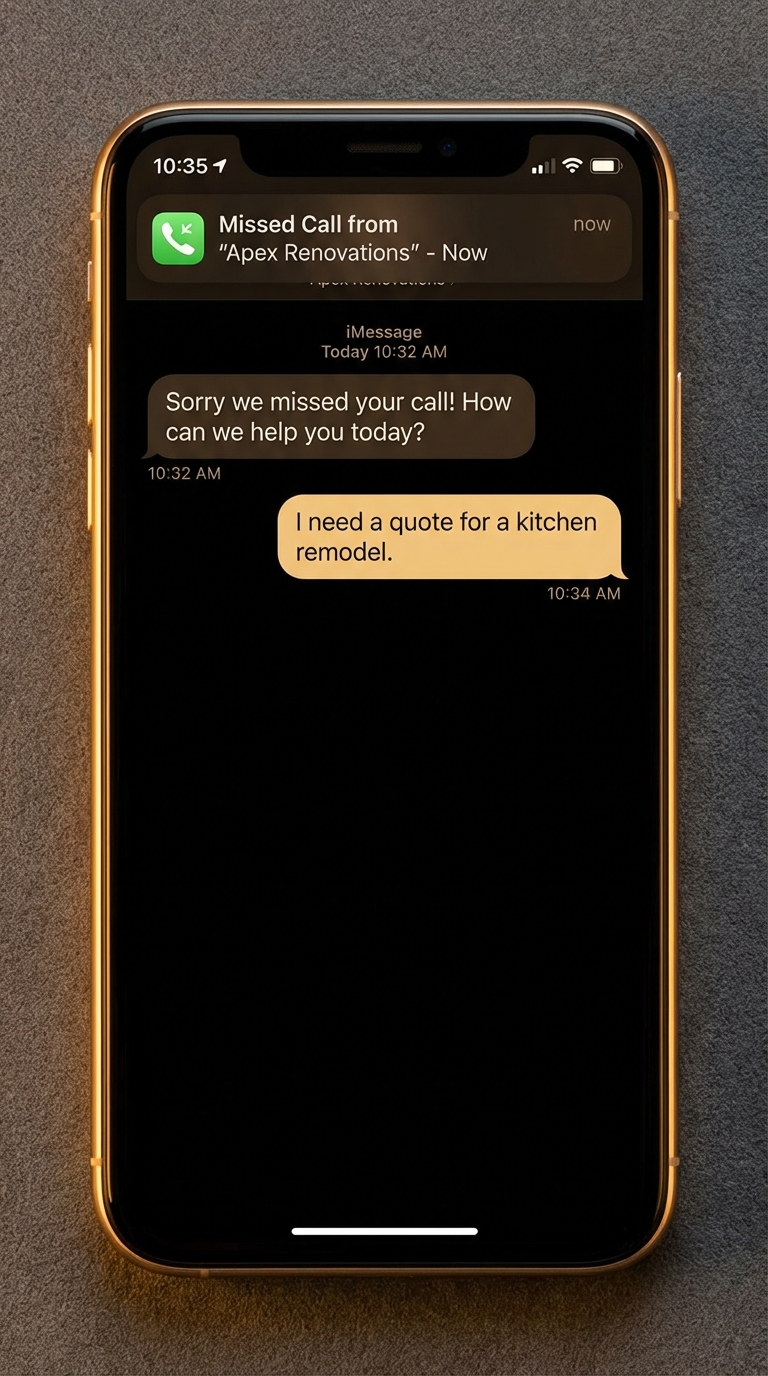
If a lead calls and you miss it, an instant text-back keeps them engaged until you can follow up.
The fix is a combination of three systems:
- Missed-call text-back so no inbound call ever goes unanswered. We cover exactly how this works in our article on missed call text-back for contractors.
- Instant lead capture forms that text you and the lead in real time.
- Automated follow-up sequences that nurture the lead for 14 days if they don't book immediately.
Most contractors are losing a lead every 2-3 days purely because they're slow. Stop that bleed first, then worry about getting more leads. We go deep on this in why contractors lose 60% of their leads.
6. Automation & AI: Stop Missing Jobs

AI receptionists now answer calls, qualify leads, and book jobs 24/7, at roughly 10% of the cost of a human answering service.
2026 is the first year where AI in contractor marketing went from "interesting" to "required to stay competitive." We're not talking about futuristic robots, we're talking about tools that answer your phone when you're on a ladder, qualify leads on your website, and handle follow-up so nothing slips through.
The three most impactful AI tools for contractors right now:
- AI inbound receptionist: Answers calls 24/7, captures lead info, schedules estimates.
- AI webchat: Engages website visitors instantly, qualifies them, collects contact info.
- AI outbound calling: Re-engages old leads, confirms appointments, re-books estimates.
We cover the honest pros and cons in Should Contractors Use AI? and break down the ROI in Are AI Receptionists Worth It?.
Want to See This in Action?
Book a free 20-minute demo. We'll show you exactly what your marketing system could look like, tailored to your trade and service area. No pitch, no pressure.
Book Your Free Demo7. Paid Ads vs. Organic Growth

Both paid and organic have a place. The question is order, not either/or.
Contractors often ask us: should I run Google Ads or invest in SEO? The honest answer is both, but in the right order.
Start with organic: your Google Business Profile, reviews, local SEO. This is the foundation. If your GBP and website can't convert organic traffic, paid traffic will burn cash faster.
Then layer paid: once your site converts at 8%+ and your reviews are strong, Google Local Services Ads (LSA) and Google Search Ads become the accelerator. LSA is particularly powerful because you only pay per lead, not per click.
The rough budget math:
- Under $1M revenue: 80% effort on organic, 20% on LSA.
- $1M-$3M: 60% organic foundation, 40% on paid (LSA + Search).
- $3M+: Full-funnel, including retargeting and branded search.
8. What to Budget (By Revenue Stage)
A healthy marketing budget for contractors runs 7-12% of gross revenue. That sounds like a lot, but it's not when you break it down and compare to the cost of missing jobs.
At our recommended $297/mo foundation package, you're looking at roughly $3,500/year for a full marketing system. The math is simple: if that system books you even one extra medium-ticket job, it pays for itself with a 2-3x return.
Curious what individual services cost? We break down all the pricing in How Much Does a Contractor Website Cost?.
9. Common Mistakes That Waste Money

Most contractors don't have a marketing problem, they have a leaky-bucket problem. Fix the leaks first.
We've seen every flavor of wasted marketing spend. The top five killers:
- No follow-up system. You spend $500 on ads, get 12 leads, and close 2 because you never called the other 10 back. Read how to follow up with contractor leads.
- A beautiful website that doesn't convert. Pretty is not the goal, booked jobs is the goal. See why your contractor website isn't getting calls.
- Scattershot advertising on every platform at once with no data on what's working.
- Ignoring reviews because "customers will leave them if they want to." They won't, and you'll watch competitors with inferior work outrank you.
- Doing marketing yourself when your time is worth $200+/hr on a job site.
We covered all ten in detail in 10 Contractor Marketing Mistakes That Cost You Jobs.
10. Putting It All Together
Contractor marketing in 2026 isn't about doing more. It's about doing the right things in the right order:
- Fix your website and Google Business Profile first.
- Systematize reviews.
- Install speed-to-lead and missed-call text-back.
- Add AI and automation to catch what humans miss.
- Layer paid ads once the foundation is converting.
- Measure, iterate, improve.
If you'd rather skip the learning curve, that's exactly what we do. Our $297/mo system handles all of the above, so you can stay on the job site. Book a free demo and we'll show you how it works in under 20 minutes.