SEO isn't a one-time project. It's a compounding system. Set it up right and it pays you every month for years.
Contractor SEO in 2026 is both easier and harder than it used to be. Easier because Google has gotten very good at understanding intent. Harder because your competitors have also caught on, and the AI Overviews are pulling answers directly from the top-ranked content.
The contractors who win local search this year aren't doing anything exotic. They're doing the fundamentals well, consistently, for 6-12 months. This guide is the full playbook.
What You'll Learn
1. What Contractor SEO Actually Is
SEO for contractors has two parts:
- Local SEO: Ranking in Google Maps and local pack for searches like "roofer near me" or "electrician [city]."
- Organic SEO: Ranking in the regular blue-link results for informational and commercial queries.
For most contractors, local SEO drives 70-80% of SEO value. Organic is the compounding asset that pays off in months 6-12. You need both, but in the right order.
2. Keyword Strategy

There are only three types of keywords that matter for contractors. Focus on them.
You need to target three keyword types:
- Money keywords: "[service] [city]" (e.g., "roof replacement Dallas"). High intent, high competition.
- Long-tail money keywords: "[service] [neighborhood/suburb]" (e.g., "roof replacement Plano"). Lower competition, still high intent.
- Informational keywords: "how much does [service] cost in [city]" or "do I need a permit for [project]." Research-stage but converts well.
Skip vanity terms like "best contractor" that sound good but don't convert.
3. Google Business Profile (Always First)
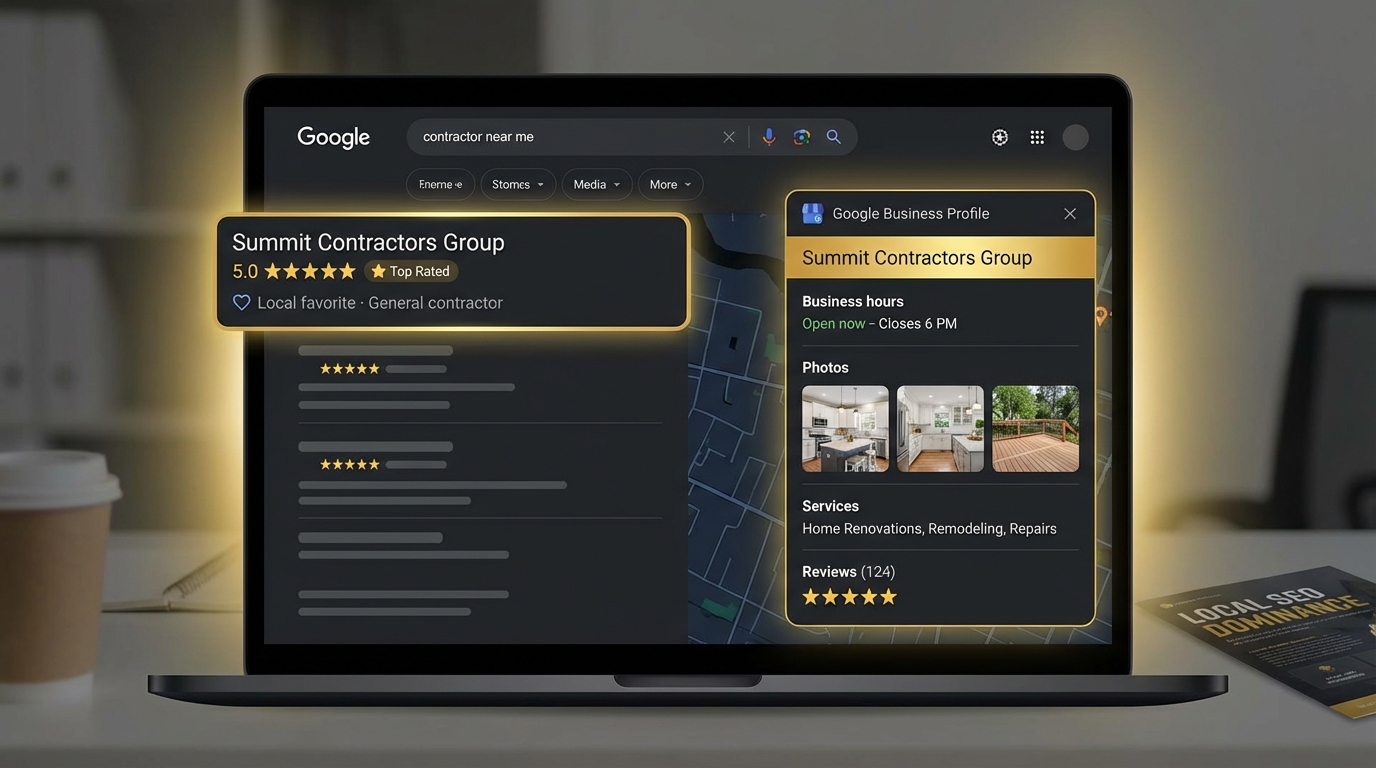
Before any on-page work, optimize your GBP. It drives 70% of your local visibility. Full playbook in the Google Business Profile guide and Google Maps ranking guide. Our GBP optimization service handles it if you don't want to.
4. On-Page SEO
For each service page on your website:
- Title tag: "[Service] in [City] | [Your Company]"
- H1: Match title tag intent ("[Service] in [City]")
- URL: /[service]-[city]/
- Meta description: 150-160 char summary with primary keyword
- H2 sections: Use secondary keywords (cost, process, FAQ, service area)
- Internal links to related service pages and blog content
- Schema markup: LocalBusiness + Service schema
- Alt text on every image with natural keyword inclusion
5. Content That Ranks
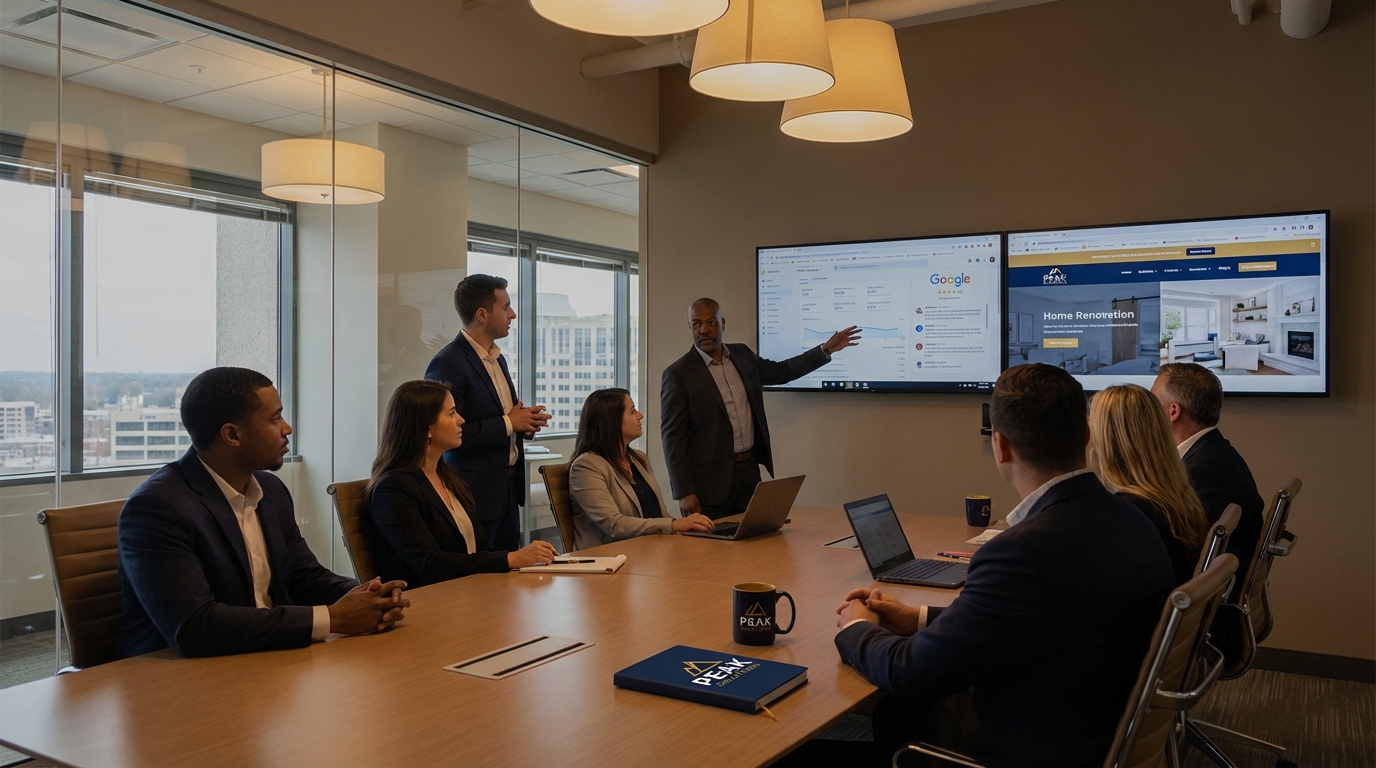
Content is how contractors rank for the questions homeowners ask before they're ready to hire.
Your content strategy for the year:
- One service page per service you offer (8-15 pages).
- One service-area page per city you serve (5-20 pages).
- 2 blog posts per month answering specific questions ("how much does a bathroom remodel cost in [city]?").
- Case study per month with photos, numbers, and the homeowner's location.
6. Technical SEO
The non-negotiables:
- HTTPS/SSL (standard, free with modern hosts).
- Mobile responsive design.
- Core Web Vitals passing (load time under 3s, good LCP/CLS).
- XML sitemap submitted to Google Search Console.
- Robots.txt not blocking important pages.
- Structured data markup (LocalBusiness, Service, Review, FAQ).
- Clean URL structure.
If your current site fails on any of these, it's worth rebuilding. Our contractor website service includes all technical SEO by default.
7. Local Backlinks
Good backlinks for contractors come from:
- Chamber of Commerce membership page
- Local supplier and material provider "contractors we trust" pages
- Charity sponsorships with backlinks
- Local news features
- Industry association listings (NRCA, NARI, etc.)
- Local podcast interviews
Quality over quantity. 10 great local backlinks beat 1,000 spam ones.
Let Us Run Your SEO
Full SEO (content, GBP, citations, on-page) included in $297/mo. Free 20-minute demo.
Book Your Free Demo8. SEO in the AI Overview Era

Google's AI Overviews pull answers from top content. If you're not ranking, you're not being mentioned.
Google's AI Overviews (SGE) changed SEO in 2024-2025. Now when a homeowner asks "how do I know if I need a new roof," Google often answers directly with content pulled from 3-5 sources. If you're not ranked in the top 10, you're not in the AI answer.
How to optimize for AI Overviews:
- Answer questions directly in 2-3 sentences at the top of each article.
- Use FAQ schema with concise Q&A pairs.
- Include clear data, lists, and comparisons (AI loves structured info).
- Keep content factually tight, AI quality-checks.
- Build topical authority with multiple related articles.
9. How to Track Progress
Tools to use:
- Google Search Console (free): organic keyword performance.
- Google Analytics 4 (free): traffic, conversions.
- Local Falcon ($30-$100/mo): Maps ranking per grid point.
- Call tracking: which channel drove each call.
Check monthly, not daily. SEO moves slowly.
10. Realistic Timeline
- Months 1-2: GBP optimized, on-page fixed, 10 service-area pages live. No ranking movement yet.
- Months 3-4: Content adding up. Service pages climbing. Small ranking lift.
- Months 5-6: Map 3-pack for primary keywords. Organic climbing.
- Months 7-12: Compounding. More long-tail. Quarterly traffic up 30-80%.
- Year 2: Market dominance. Competitors copying you.
For broader context see the complete marketing guide, Google Maps ranking, and how to get more contractor leads.
Bottom Line
SEO is a 6-12 month compounding play. It's not quick. It's not cheap. But done right it's the single best investment a contractor makes, because every month after month 6 you're earning free traffic that would have cost $50-$150 per lead on ads.
Ready to dominate? Book a demo and we'll run an SEO audit on your current setup.