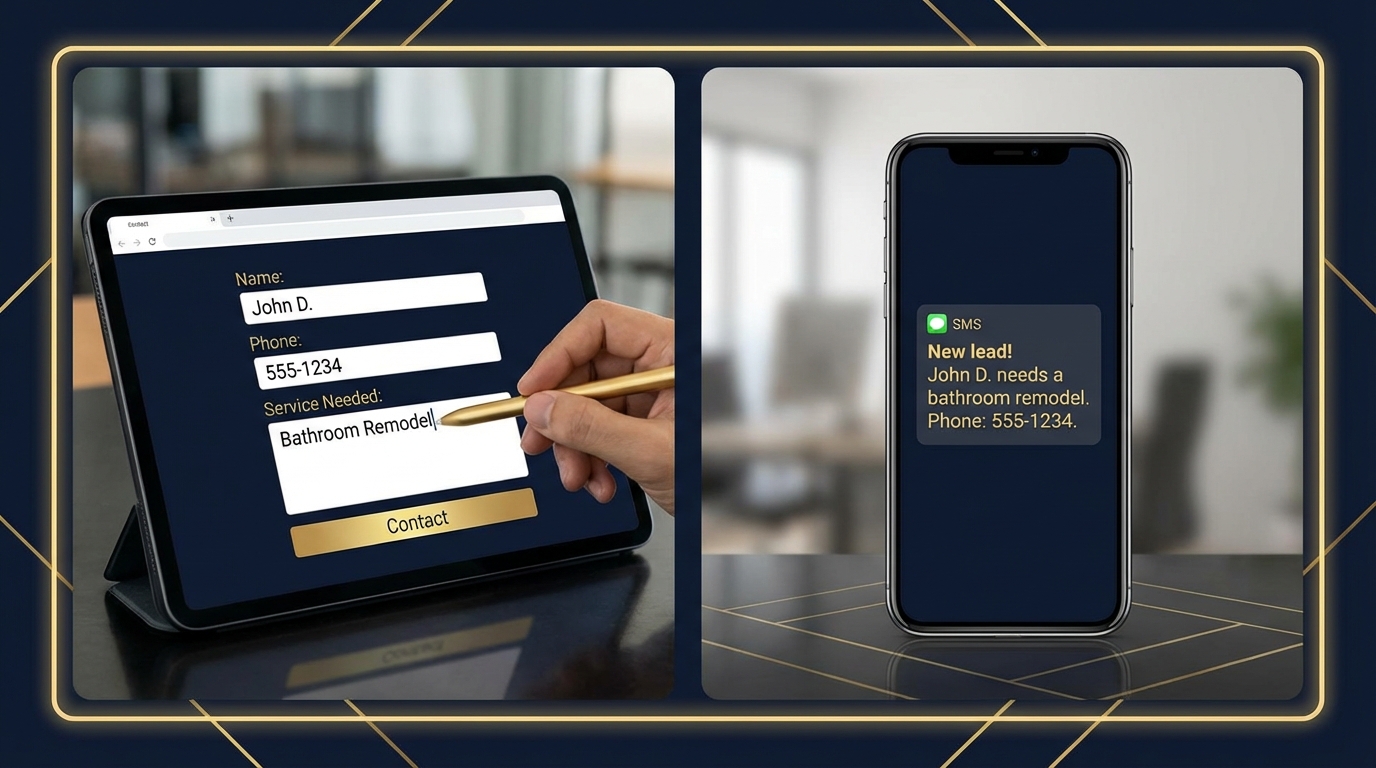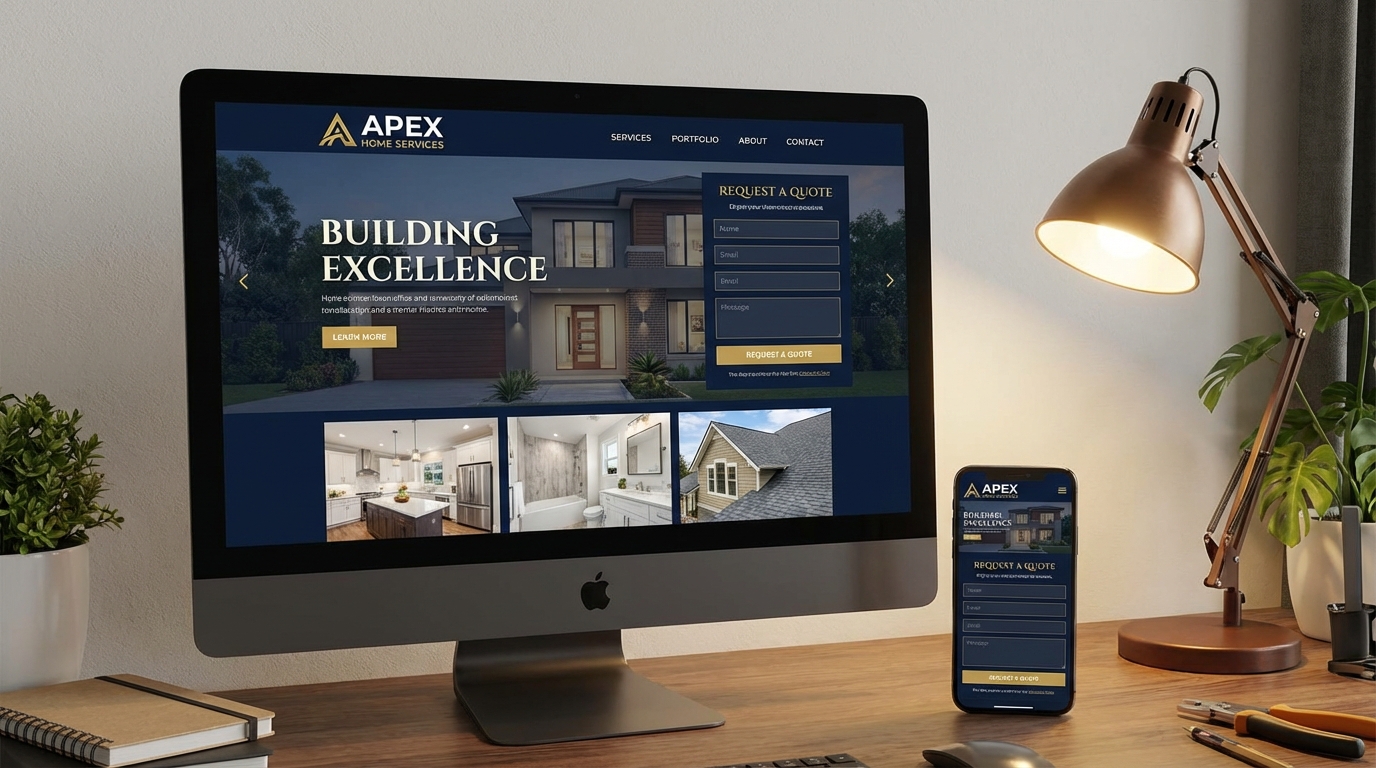
The true cost of a contractor website isn't the build, it's the ongoing ability to generate leads.
If you've ever gotten three quotes for a contractor website and seen one at $800, one at $6,500, and one at "it depends," you know how frustrating this question is. The range is huge because the industry isn't honest about what you're actually paying for, and most quotes leave out the ongoing costs that matter more than the build price.
This article breaks down every realistic price tier for a contractor website in 2026, what you actually get at each tier, and the hidden fees nobody tells you about upfront. By the end you'll know exactly what to expect and what to walk away from.
What You'll Learn
1. The Short Answer
A functional contractor website that actually generates leads in 2026 costs between $2,500 upfront plus $100-$300/mo ongoing, or $197-$497/mo all-in on a subscription model. Anything under that is likely a template you'll outgrow in six months. Anything over $10,000 for the build alone is probably overpriced unless you're running a $5M+ operation with very specific needs.
Before we break down each tier, the most important thing to understand is this: the website itself is worthless without the systems around it. Forms that text you, missed-call text-back, review flows, SEO, lead nurture. A $10K website with none of these will underperform a $297/mo fully-integrated contractor website. Every time.
2. DIY Website Builders ($0-$500/yr)

DIY platforms look cheap on the sticker, but the cost shows up in conversion rate, not the invoice.
The big names here: Wix, Squarespace, GoDaddy, Weebly. All hover between $16 and $45/mo for a business plan. You pick a template, drop in your logo, write some copy, and you're live in a weekend.
What you get: A page on the internet. That's it.
What you don't get:
- Forms that route leads to your phone as a text in real time
- SEO structure that ranks for "[trade] near me"
- Integration with your CRM or Google Business Profile
- Missed-call text-back
- Conversion tracking
If you're a brand-new contractor with zero budget, DIY is a fine starting point. Just don't expect it to carry you past your first 10 customers. As soon as you have cash flow, upgrade, because homeowners are scanning your site in 90 seconds and Wix templates look like Wix templates.
3. Freelance Designers ($1,500-$5,000)
A freelance designer from Upwork, Fiverr Pro, or a local referral will typically charge $1,500-$5,000 for a 5-8 page contractor website. Quality varies wildly, so does what's included.

Freelancers range from excellent to nightmare. Vet their portfolio and specifically look for contractor work, not restaurants and yoga studios.
What's usually included:
- Custom design (sometimes from a template, sometimes from scratch)
- 5-8 pages of copy (you may need to write it)
- Mobile-responsive layout
- Contact form
- Basic SEO (meta tags, page titles)
What's usually NOT included:
- Ongoing maintenance (you're on your own once it's delivered)
- Hosting (extra $10-$30/mo)
- Updates and security patches
- Integration with automation tools
- Conversion optimization after launch
Warning: Many freelancers build on WordPress with free themes that will break within 18 months if not maintained. Plan for $500-$1,500/yr in maintenance if you go this route, or factor in a rebuild every 2-3 years.
4. Traditional Agency ($6,000-$25,000)

Agencies deliver polish and process, but the price tag rarely correlates to leads-per-dollar for most contractors.
A traditional marketing agency will charge $6,000-$25,000 for a custom contractor website, with typical contractor sites landing in the $8,000-$12,000 range. Add $150-$500/mo for hosting, maintenance, and ongoing SEO.
What's usually included:
- Discovery and strategy phase
- Custom design and branding
- Professional copywriting
- SEO foundation
- Basic analytics setup
- Sometimes: lead nurture, email automation
Agencies are the right choice for contractors doing $3M+ annually who need a distinctive brand and can absorb a 4-8 week build timeline. For a typical 1-10 truck operation, agencies often sell polish the homeowner never notices while skipping the systems that actually drive revenue.
5. Subscription Model ($197-$497/mo)
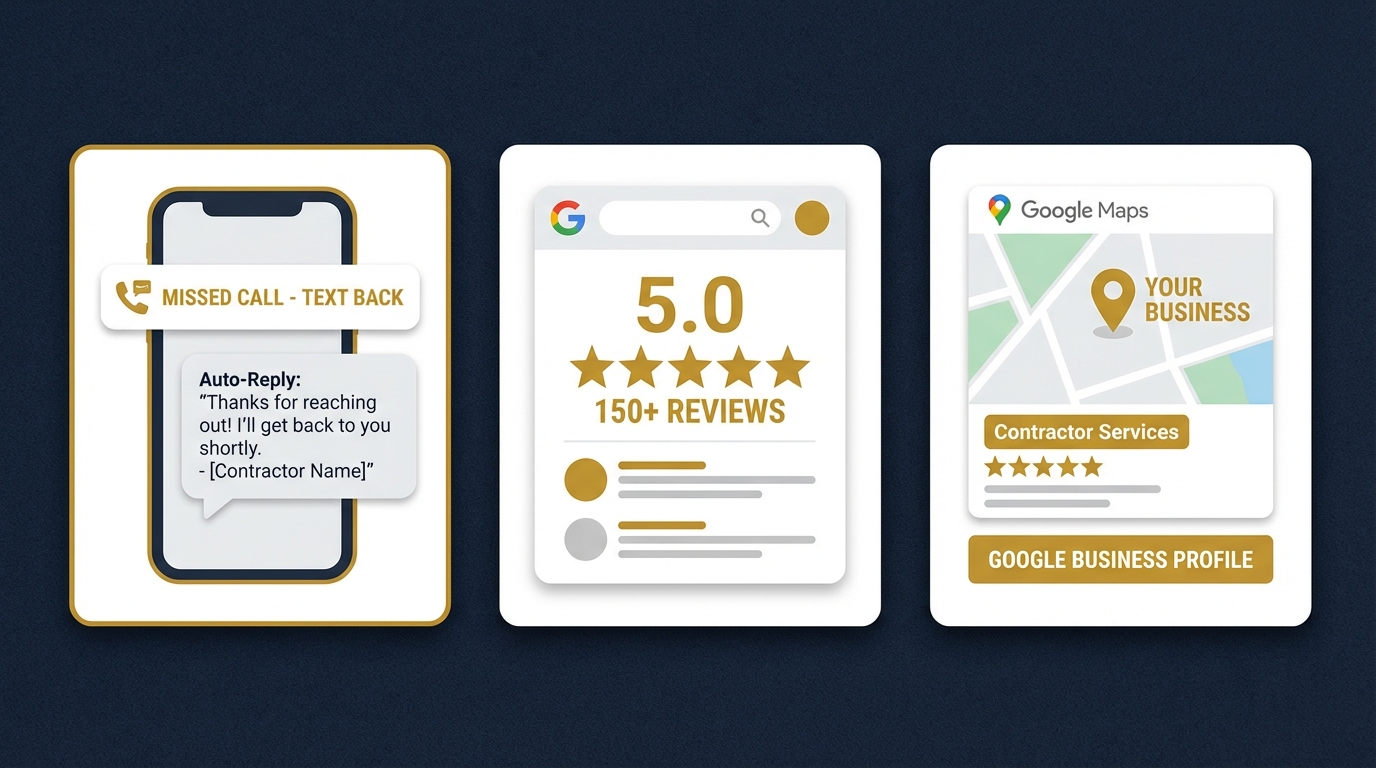
The subscription model bundles website, automations, and AI agents, so you pay for the outcome, not the artifact.
This is where contractor marketing has been headed for years. Instead of buying a website as a one-time asset, you subscribe to a complete marketing system that includes the website plus all the supporting pieces.
Our $297/mo contractor system includes:
- Professional, conversion-optimized website (rebuilt or updated anytime)
- Missed-call text-back
- Automated review requests
- Lead capture forms with instant text alerts
- Google Business Profile optimization
- Hosting, SSL, maintenance, updates
- Ongoing support
At $297/mo, the annual cost ($3,564) is roughly the same as a mid-tier agency build, but you're getting all the systems a website alone can't provide. For most contractors, this is the math that works.
6. The Hidden Fees Nobody Mentions

The sticker price is rarely the real price. Ask about every item below before signing.
Before you sign any contract, ask about each of these. They're where "cheap" websites get expensive fast:
- Hosting: $10-$50/mo, often quoted separately.
- SSL certificate: $0-$200/yr. Should be free with modern hosts.
- Domain: $15-$25/yr.
- Maintenance: $50-$300/mo for WordPress sites.
- Copy revisions: Often $100-$250 per round after initial.
- New pages: $150-$500 per page after the initial build.
- Image licensing: If they use stock photos, you may owe royalties.
- SEO setup: Often $500-$2,500 additional, on top of design.
- Analytics/tracking: $100-$500 for proper setup.
- Rebuild fees: If you switch providers later, you may lose the site entirely.
Add these up and a "$3,500 website" becomes a $6,000-$8,000 first-year investment. That's why we recommend clients just compare apples to apples: all-in monthly costs versus all-in monthly costs.
7. What Contractors Actually Need
Forget price for a second. Here's what any contractor website in 2026 needs to have to generate leads:

Design matters, but conversion elements matter more. Here's the non-negotiable checklist.
- Phone number in the header, tap-to-call on mobile.
- One clear CTA above the fold (usually "Get a Free Quote").
- Service pages for each trade you do (roofing, siding, etc.).
- Service-area pages for each city you serve.
- Before/after photo gallery.
- Real reviews pulled from Google (not static testimonials).
- Trust badges: license #, insurance, BBB, years in business.
- Fast mobile load time (under 3 seconds).
- Sticky CTA or chat bubble on mobile.
- Lead form that texts you instantly.
If these ten elements aren't present, no price is a good price. If they are all present, your website will likely pay for itself on your first or second closed lead. For more on why sites underperform, read why your contractor website isn't getting calls.
8. How to Calculate ROI on a Website
Let's use real numbers. If your average closed job is $8,000 and your profit margin is 30%, each job makes you $2,400. A website that generates two additional closed jobs per month delivers $4,800 in profit per month, against a $297-$500 website cost. That's a 10x+ return.
The math only breaks down if the website doesn't convert. And that's almost always a structural problem, not a budget problem. Read our full contractor marketing guide and how to get more contractor leads for the rest of the system.
Want a Website That Actually Books Jobs?
We'll build you a conversion-optimized contractor website with all the systems included, and you can see exactly what it looks like before you commit. Free demo, 20 minutes.
Book Your Free Demo9. Red Flags When Shopping for a Website
If you hear any of these during a sales call, walk away:
- "We'll send you the files when we're done." Usually means no ongoing support and no CMS you can update.
- "SEO is not included but we can quote that separately." A site without SEO structure is half a site.
- "We use our proprietary platform." Means you can never leave without rebuilding from scratch.
- "We need 60-90 days to launch." For a typical contractor site, that's excessive.
- "Hosting and maintenance are billed separately." Ask for all-in pricing.
- No contractor examples in their portfolio. Go elsewhere.
- No talk about lead capture or follow-up. They're selling a brochure, not a lead engine.
You also want to see how they handle reviews. Our article on getting more Google reviews covers the review engine side of the equation.
10. The Bottom Line
A contractor website in 2026 costs whatever you want it to cost, from $0 to $25,000. What matters is the total system around it, not the sticker price on the design.
If you want a straight answer: budget $3,500-$5,000 for the first year if you want the thing to work. Whether you spend that on a one-time build plus ongoing fees, or on a $297/mo all-in subscription, is a matter of cash flow, not quality.
And if you'd rather skip all of this and just have it done, book a demo. We'll show you what your website could look like in under 20 minutes.